What Should Be in Them and Why They Matter
If you’ve ever purchased a CBD product and noticed a QR code or link labeled “Lab Report” or “COA,” you might have wondered what it actually means—and whether you should care.
The short answer: you absolutely should.
A Certificate of Analysis (COA) is one of the most important tools for verifying the safety, quality, and accuracy of any CBD product. Whether you're a consumer trying to make informed decisions or a business owner ensuring compliance and trust, understanding how to read these reports is essential.
In this guide, we’ll break down everything you need to know about CBD lab reports, including what they are, what should be included, and how to interpret the results.
What Is a CBD Lab Report (COA)?
A Certificate of Analysis (COA) is a document issued by an independent, third-party laboratory that tests a CBD product for:
- Cannabinoid potency
- Contaminants (like pesticides, heavy metals, and solvents)
- Safety and compliance factors
These reports confirm whether a product contains what the label claims—and whether it’s safe to consume.
Reputable CBD companies provide COAs for every batch of product, often accessible via QR code or on their website.
Why Lab Reports Matter
CBD is not regulated like pharmaceuticals, which means quality can vary widely between brands. Lab reports help ensure:
- Transparency – You know exactly what you're getting
- Accuracy – The CBD content matches what’s advertised
- Safety – The product is free from harmful contaminants
- Compliance – THC levels stay within legal limits (≤0.3% federally)
Without a COA, you’re essentially buying blind.
Key Sections of a CBD Lab Report
Let’s break down the most important sections you’ll typically find in a COA and how to read each one.
1. Product Information & Batch Details
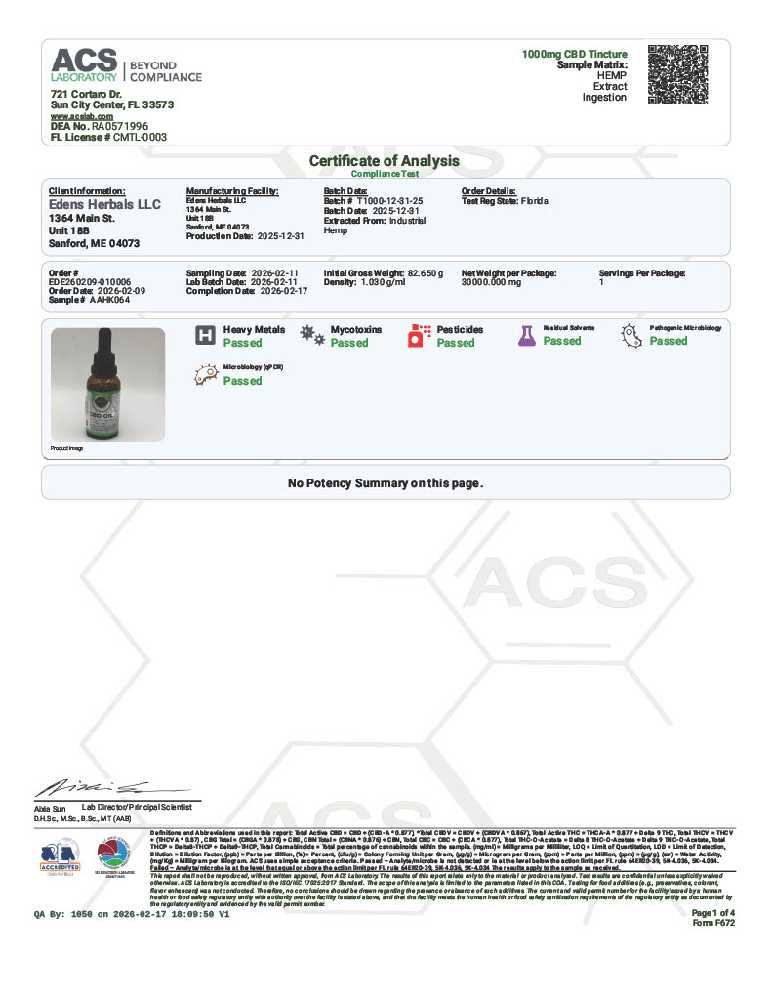
Look for:
- Product name
- Batch or lot number
- Sample ID
- Date of testing
- Manufacturer/distributor name
Why it matters:
Every CBD product batch can vary slightly. You want to make sure the report corresponds to the exact batch you purchased—not a generic or outdated one.
2. Cannabinoid Profile (Potency)
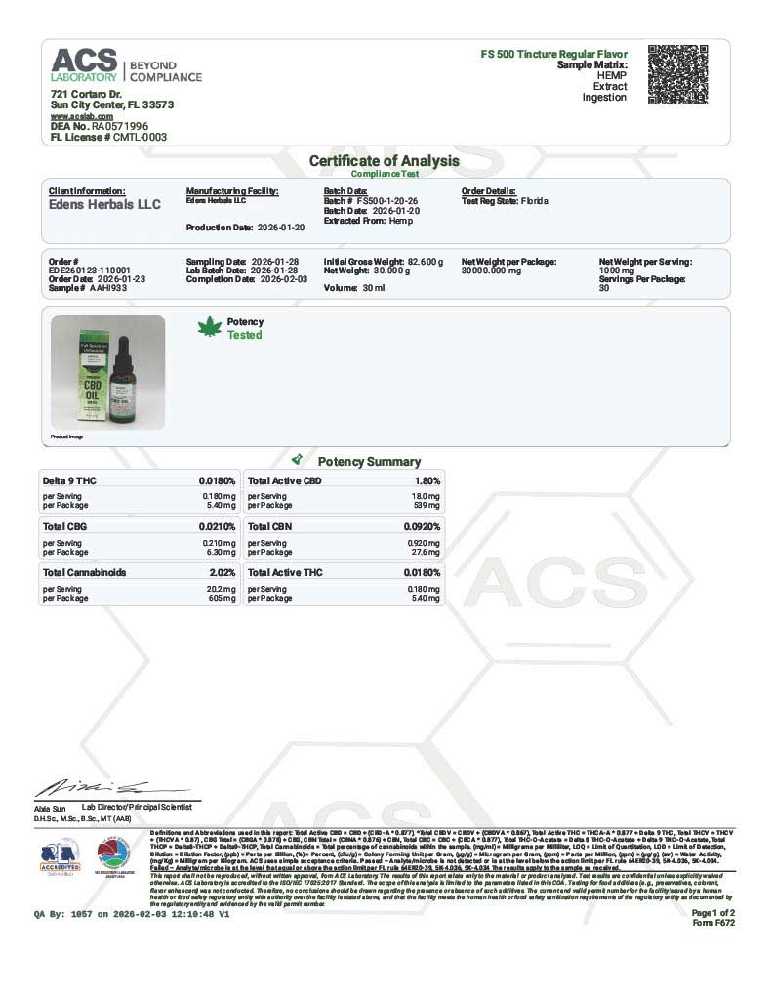
This is the most important part of the report for most users.
It shows the levels of cannabinoids in the product, including:
- CBD (Cannabidiol)
- THC (Delta-9 Tetrahydrocannabinol)
- CBG, CBN, CBC (minor cannabinoids)
You’ll typically see results in:
- mg per gram (mg/g)
- percentage (%)
- total mg per package
What to check:
- Does the CBD amount match the label ± 10% ?
- Is THC below 0.3% (for federally legal hemp)?
- Are there additional cannabinoids (for full-spectrum or broad-spectrum products)?
Example:
If a bottle claims 1000 mg CBD, the COA should confirm a similar amount (within variance of ±10%).
3. Terpene Profile (Optional but Valuable)
Not all COAs include this, but high-quality brands often do.
Terpenes are aromatic compounds that may influence the effects of CBD. Common ones include:
- Myrcene
- Limonene
- Pinene
- Linalool
Why it matters:
- Indicates product quality and extraction method
- Supports the “entourage effect” in full-spectrum products
- Adds transparency for premium formulations
4. Pesticide Testing
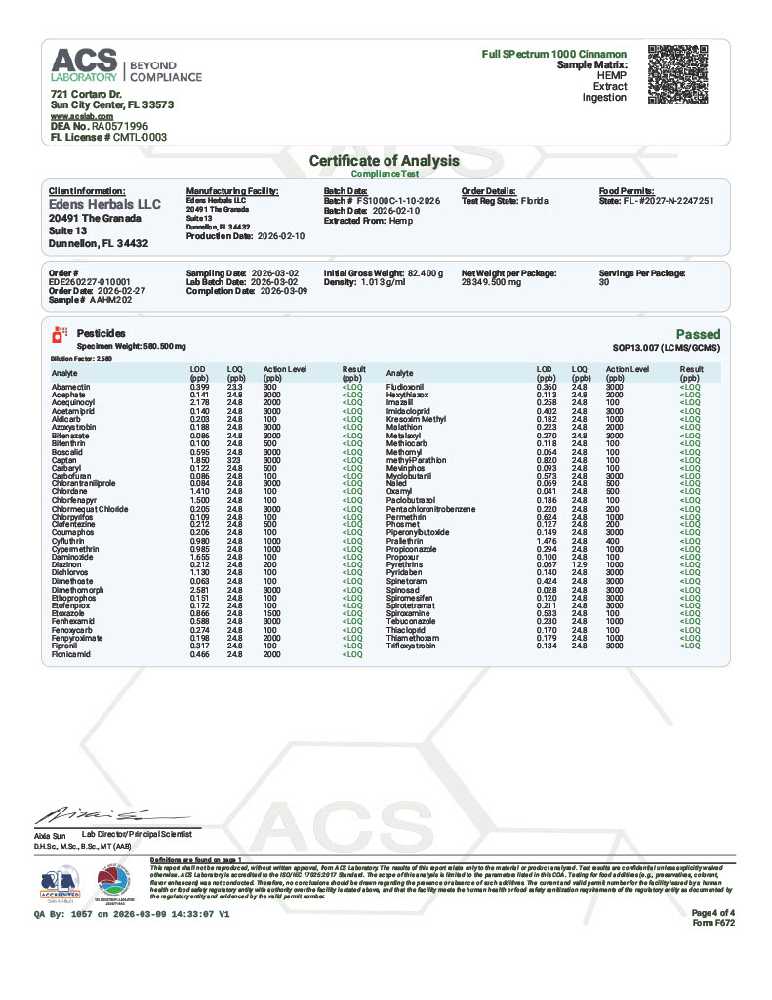
CBD is derived from hemp, a plant that can absorb chemicals from soil. That’s why pesticide testing is critical.
What you’ll see:
- A list of pesticides tested
-
Results marked as:
- ND (Not Detected)
- Pass/Fail
- Measured values vs. allowable limits
What to look for:
- Ideally, all results should be ND (Not Detected) and Passed
- If detected, levels must be below regulatory limits
5. Heavy Metal Testing
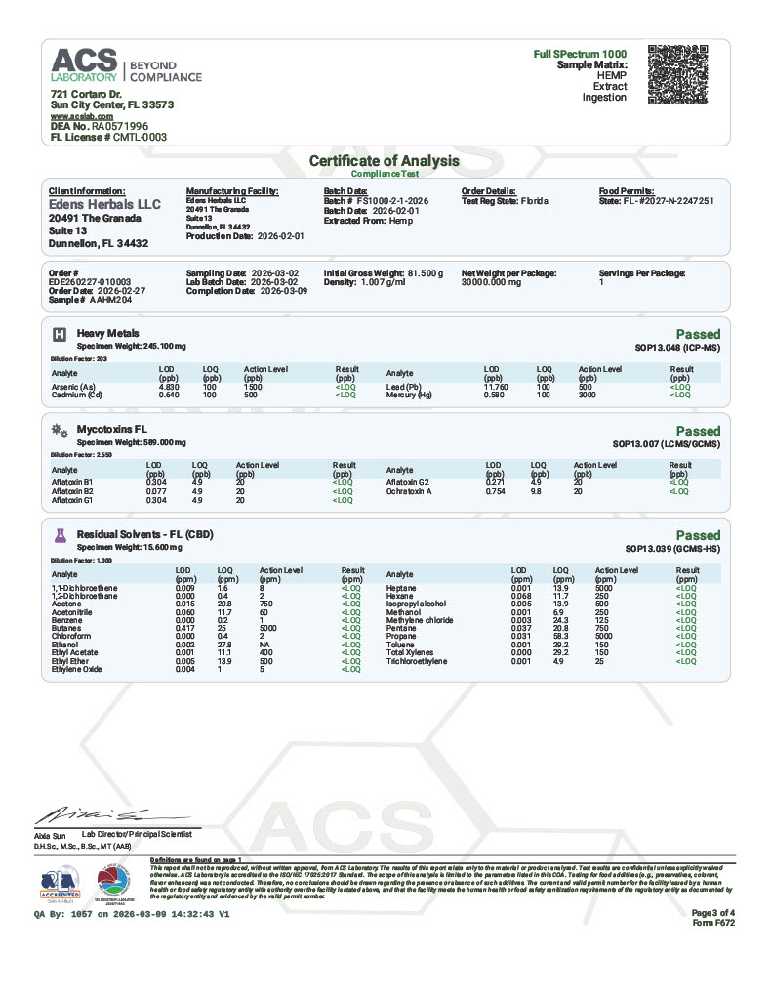
Hemp can also absorb heavy metals from soil.
Common metals tested:
- Lead (Pb)
- Arsenic (As)
- Mercury (Hg)
- Cadmium (Cd)
What to look for:
- Results should be ND or below safe limits
- A “Pass” status is essential
6. Residual Solvent Testing
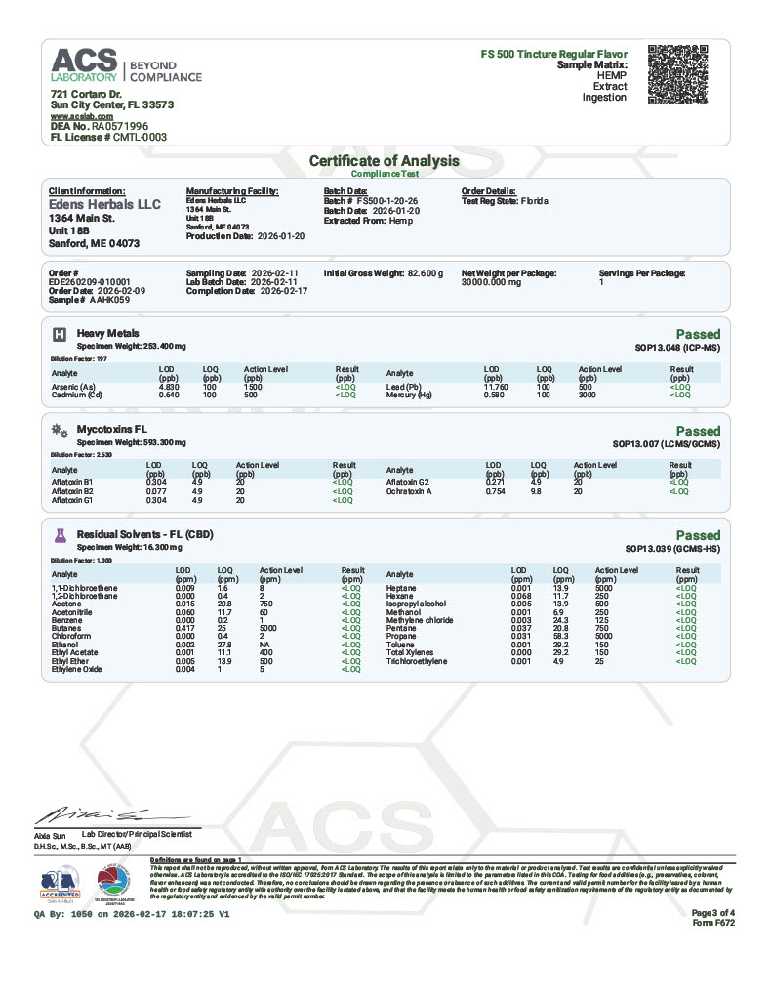
This section checks for leftover chemicals from the extraction process.
Common solvents:
- Ethanol
- Butane
- Propane
- Hexane
Why it matters:
- Poor extraction can leave harmful residues
- Clean products should show ND or very low levels
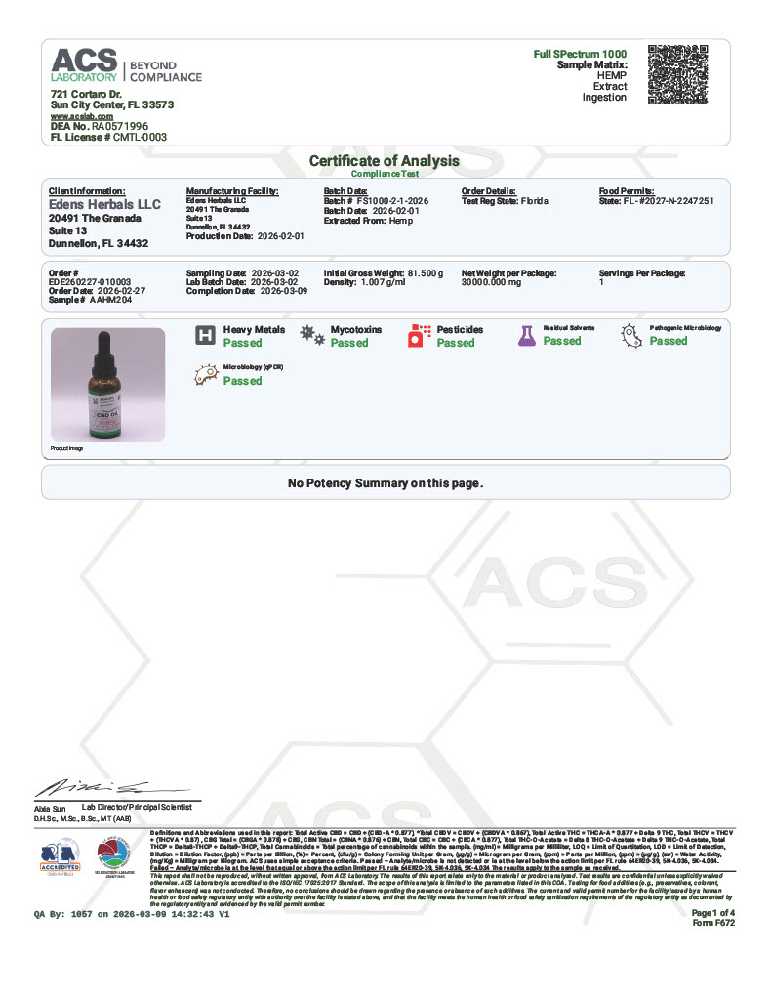
7. Microbial Testing
This ensures the product is free from harmful microorganisms.
Tests may include:
- Yeast and mold
- E. coli
- Salmonella
- Total aerobic bacteria
What to look for:
- All results should pass
- Pathogens should be absent
8. Mycotoxin Testing
Mycotoxins are toxic compounds produced by mold.
Common ones tested:
- Aflatoxins (B1, B2, G1, G2)
- Ochratoxin A
Why it matters:
- These are dangerous even in small amounts
- Results should be ND or below strict limits
Understanding Common COA Terms
Here are a few terms you’ll see frequently:
- ND (Not Detected): The substance was not found at measurable levels
- LOQ (Limit of Quantification): The smallest amount the lab can reliably measure
- Pass/Fail: Indicates compliance with safety thresholds
- mg/g: Milligrams per gram of product
- % (percentage): Concentration relative to total weight
Red Flags to Watch Out For
Not all COAs are trustworthy. Be cautious if you see:
- Missing batch numbers
- No testing date or outdated reports
- No third-party lab listed
- Incomplete testing (only potency, no contaminants)
- Results that look “too perfect”
- No QR code or easy access to reports
What Should Be in a Complete COA?
A high-quality CBD lab report should include:
- ✔ Product and batch identification
- ✔ Cannabinoid potency results
- ✔ THC compliance confirmation
- ✔ Pesticide screening
- ✔ Heavy metal testing
- ✔ Residual solvent analysis
- ✔ Microbial testing
- ✔ (Optional but ideal) terpene profile
- ✔ Testing lab name and accreditation
Final Thoughts
Understanding how to read a CBD lab report empowers you to make smarter, safer decisions—whether you're buying products or selling them.
For consumers, COAs provide peace of mind.
For businesses, they build trust, credibility, and compliance.
In an industry where transparency is everything, a clear and complete lab report isn’t just a bonus—it’s a necessity.

